Why Your Kitchen Needs a Deep Clean (Not Just a Wipe-Down)
What's really hiding around the sink, the hob and inside your appliances — and why a deep clean reaches what daily wiping can't.
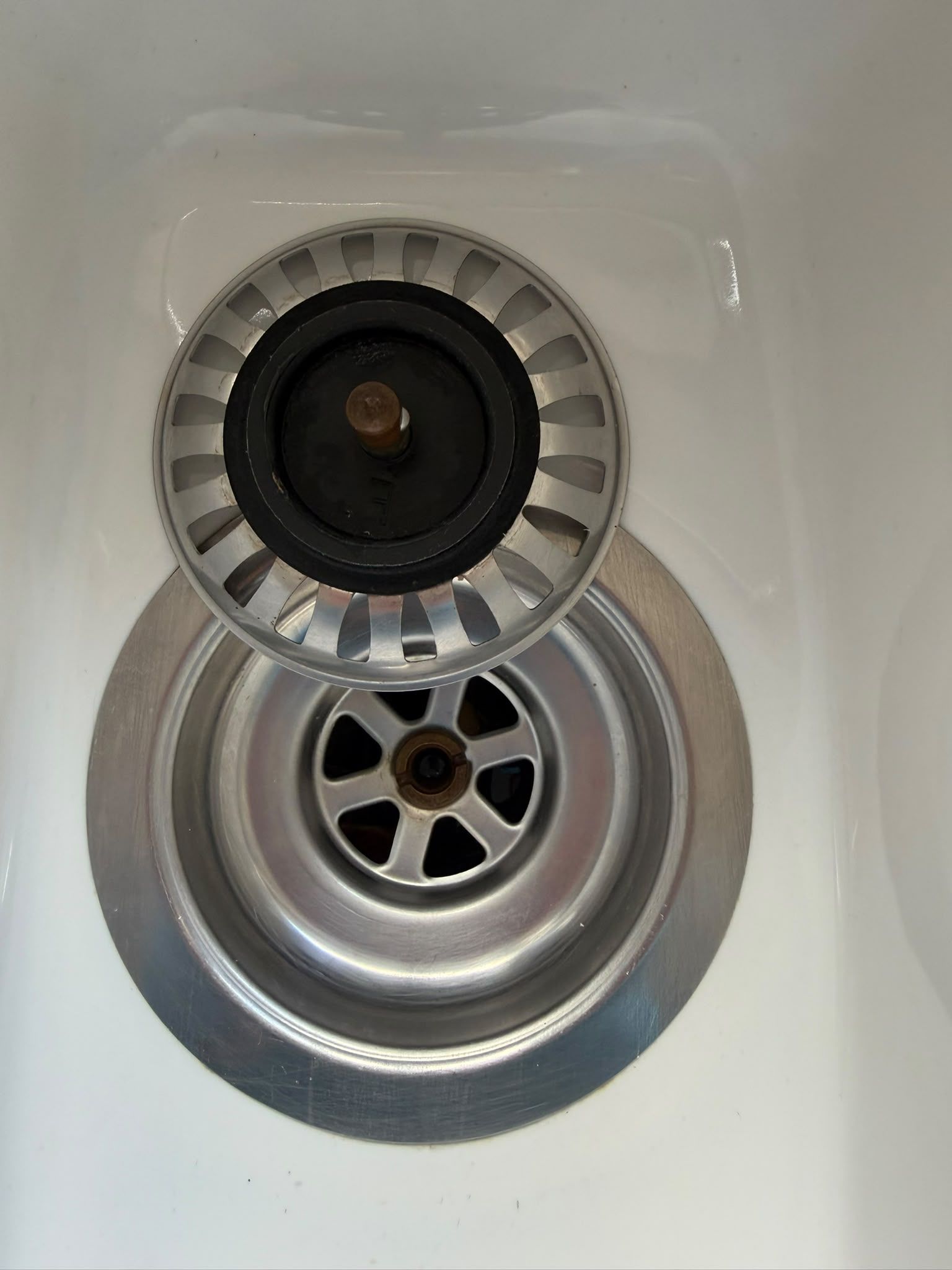
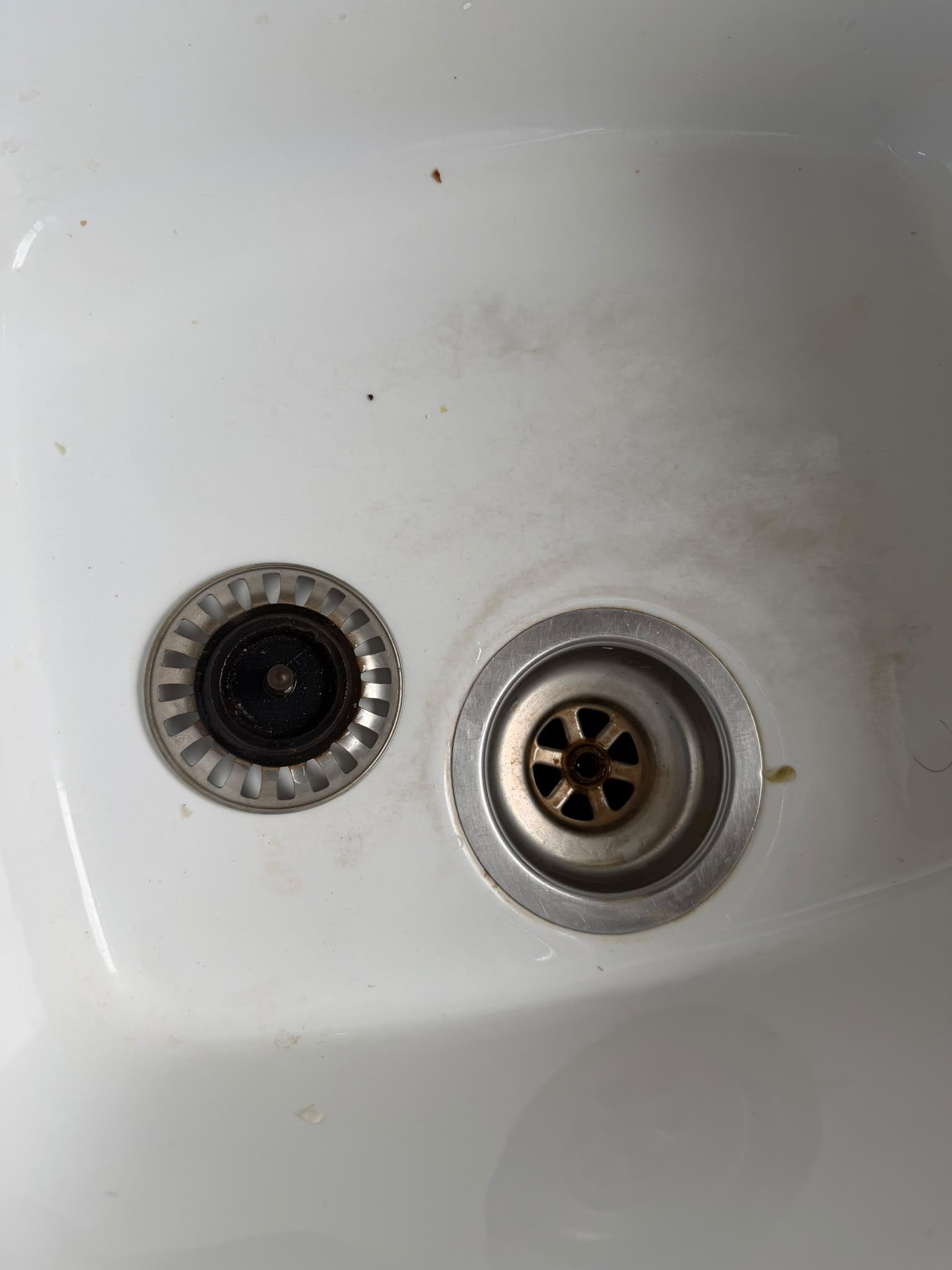
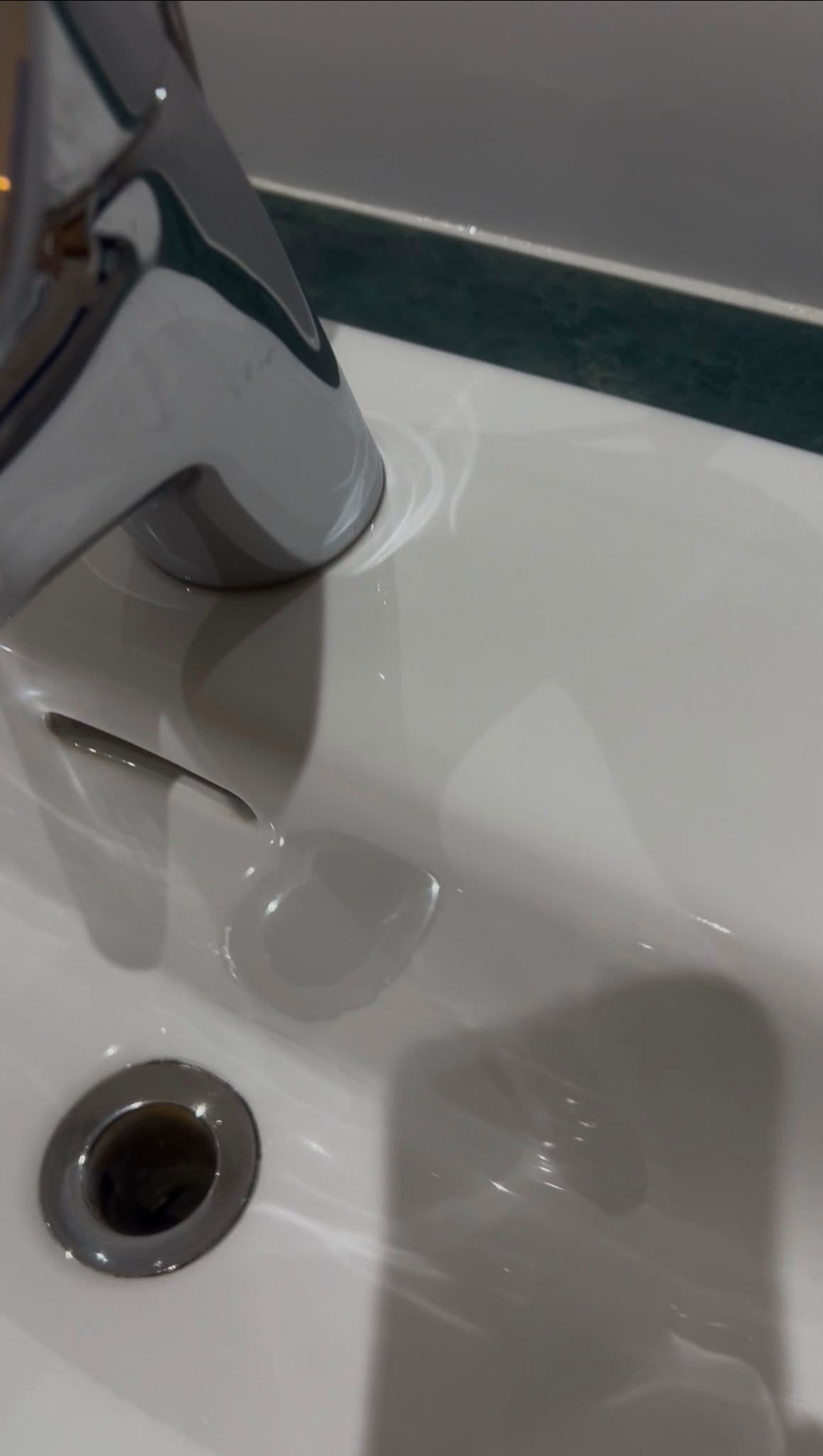
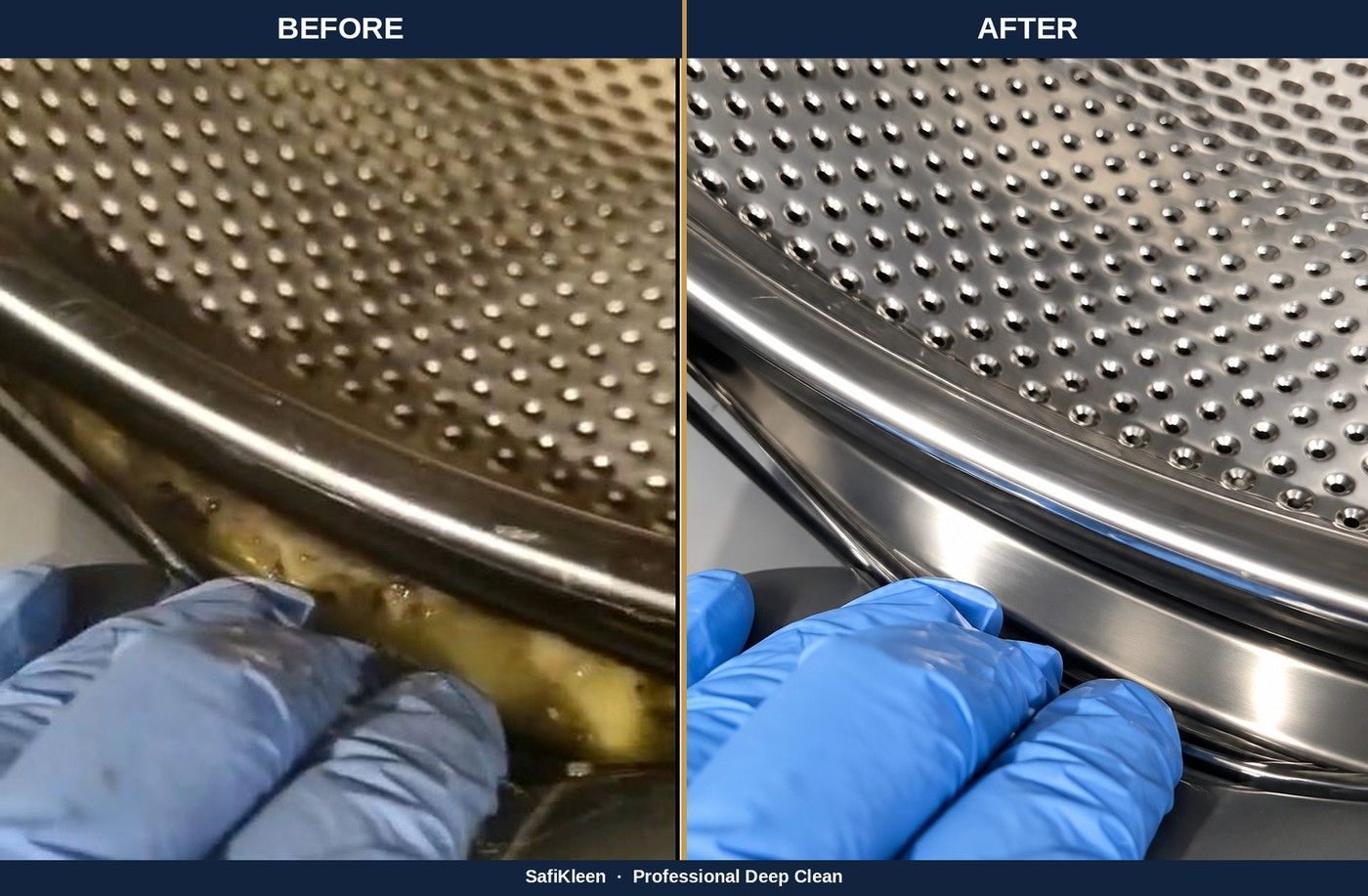
Most kitchens get wiped down every day and properly cleaned maybe once a month, if that. The photos in this post show a real domestic kitchen sink before and after a deep clean: months of grease and limescale built up around the drain and taps, cleared right back to bare stainless steel. The sink is usually where it's most visible, but it's rarely the only place in a kitchen where this kind of build-up collects. Below is what actually happens inside a kitchen between deep cleans, why it matters more than it looks, and why the usual spray-and-wipe routine only ever gets you halfway there.
What's actually going on in a working kitchen
A kitchen is the hardest-working room in most homes. Grease from cooking, steam from the kettle and the hob, food residue, and hard water all land on the same handful of surfaces, day after day. Around a sink specifically, that means the drain basket, the overflow slot, and the seal where the tap meets the worktop all trap grease and limescale that a quick rinse never fully shifts. The same pattern shows up around the hob, where splashes of oil bake on with every use, and inside appliances like the oven and extractor, where grease turns tacky, then hard, the longer it's left. None of this is about anyone being untidy. It's simply what happens in a kitchen that gets used properly.
The parts a wipe-down never reaches
A few spots come up again and again, and they're also the ones a normal wipe-down, or even a fairly thorough weekly clean, tends to miss.
The sink overflow and drain basket rim. Water and food particles collect under the lip of the basket and in the overflow channel, and both stay damp between washes, which is exactly the kind of spot grease and limescale bond to.
The tap base and worktop seal. Where the tap meets the worktop is one of the most touched spots in the whole kitchen, and it's also one of the easiest to wipe around rather than actually clean underneath.
Oven door seals and runners. The rubber gasket around an oven door and the metal runners the racks sit on both trap baked-on grease that a standard oven clean cycle softens but doesn't always fully lift.
Extractor filters and hob burner rings. Grease is drawn straight into the extractor filter every time it's used, and burner rings and igniters collect the same residue every time something boils over.
Why this matters beyond appearance
It's easy to treat this as purely cosmetic, but there are three real consequences.
Hygiene. A sink that looks clean can still harbour bacteria in the drain basket and overflow, which matters most for anything prepared straight on or near the sink, like raw meat, fish, or vegetables.
Odour. That faint musty or greasy smell that lingers even after cleaning is almost always coming from a drain, extractor filter, or oven seal that's been missed, not from the bin or the food itself.
Performance. Limescale and grease affect how efficiently an extractor fan pulls air, how evenly an oven heats, and how well a tap seals. Small things that add up to higher energy use and, eventually, repairs.
Why a spray-and-wipe isn't enough
Daily wiping and even a proper weekly clean are genuinely useful; they slow everything down. What they don't do is remove build-up that's already worked its way into a seal, a filter mesh, or the underside of a drain basket, because those spots aren't reachable with a cloth and don't get flushed out just by running the tap. That's the real difference between maintenance and a deep clean: maintenance keeps a clean kitchen clean for longer, while a deep clean physically removes what's already built up in the places you can't easily see or reach.
How often does it need doing
For most households, wiping surfaces daily and giving the kitchen a proper clean weekly is enough to keep on top of everyday mess. A full deep clean, covering the sink, hob, oven, extractor and appliance seals, is generally worth doing every three to six months, and more often in homes that cook a lot, run hard water, or haven't had one in a while. If it's been longer than that, or there's a smell that doesn't shift after cleaning, the kitchen is probably closer to the before photo than the after one.
Doing it properly, without harsh chemicals
Bleach and heavy-duty descalers are the instinct a lot of people reach for once they see build-up like this, but they're not necessary, and they're harder on stainless steel, seals, and worktops than most people realise. The grease and limescale shown in this post are entirely ordinary, the product of cooking, hard water, and time, and they respond well to the right products left in contact for long enough to actually break them down, rather than a quick spray and wipe. Getting a sink, hob, and oven properly clean is more about knowing where to look and what to use than it is about brute cleaning strength.
Frequently asked questions
Why does my kitchen sink still smell even though I clean it every day?
Because the smell is usually coming from the drain basket, the overflow, or the seal under the tap, not the parts of the sink you can see and wipe. Rinsing the basin doesn't reach any of these.
Is it safe to use bleach on a stainless steel sink?
Not really, and it's rarely necessary. Bleach and other harsh chemicals can dull stainless steel and degrade rubber seals over time, and the same limescale and grease respond just as well to the right products used correctly.
How often should a kitchen be professionally deep cleaned?
Every three to six months for most households, and closer to every three months for a kitchen that's used daily or sees a lot of cooking. Landlords and holiday let owners often schedule one between every tenancy or booking.
Does hard water make this worse in Peterborough?
Yes. Peterborough sits in a moderately hard water area, so limescale forms faster around taps, drain baskets, and kettle elements than it would in a soft water region, which is one more reason a kitchen deep clean is worth doing on a schedule rather than only when something starts to smell.
Ready to work with SafiKleen Solutions Limited?
Let's connect! We’re here to help.
Send us a message and we’ll be in touch.
Or give us a call today at 01733 602 904
Agency Contact Form
More Marketing Tips, Tricks & Tools