Cleaned, Then Arranged: Why Where Things Go Decides How Long a Clean Lasts
A Peterborough home, before and after - and the ten minutes we spent talking about where the mugs live.
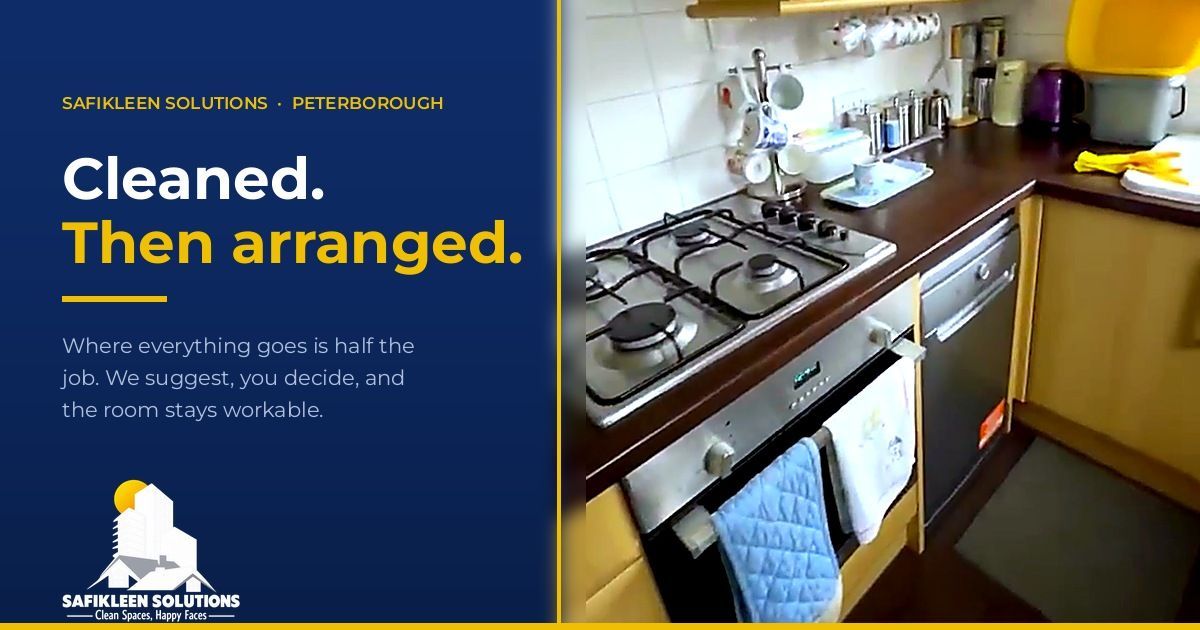
We were booked for a house cleaning job in Peterborough. We spent about ten minutes of it talking about mugs.
Not because the mugs were dirty. Because of where they lived — a cupboard above the far end of the worktop, which meant every cup of tea involved a small journey, and every used mug came back to the nearest surface instead. That surface was next to the kettle. By the end of most days it was the busiest square foot in the house.
The clean was straightforward. Crumbs across the worktop, water marks up the splashback, limescale that had settled around the bathroom plughole and was clearly winning. All of that comes off.
The harder question is the one nobody books us for: why does it come back so fast?
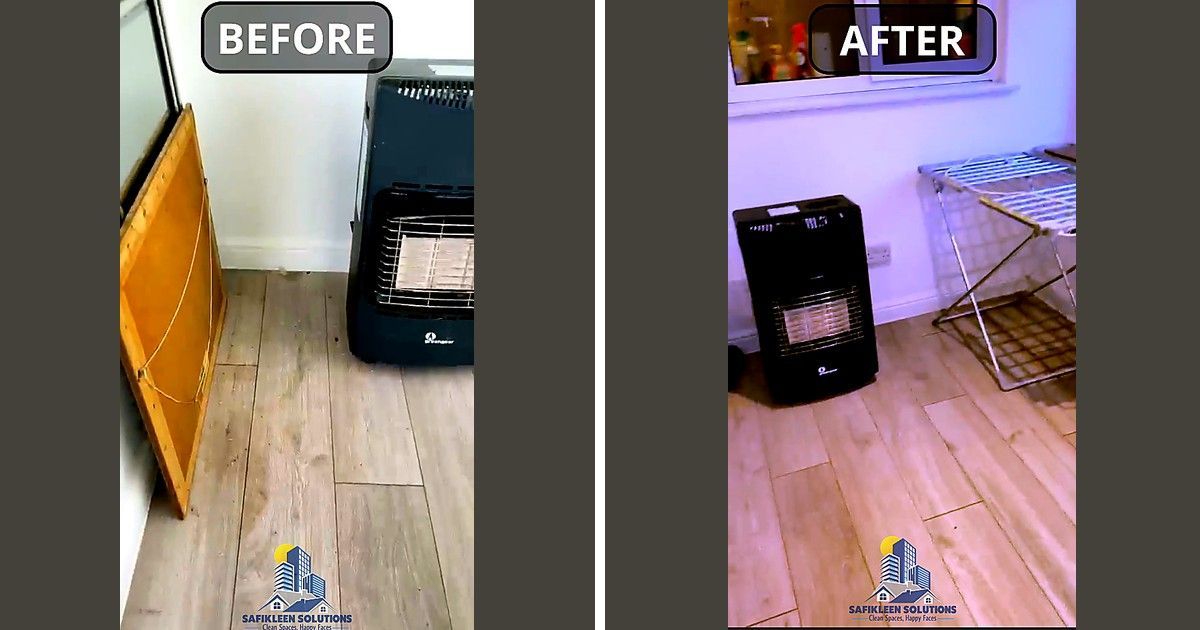
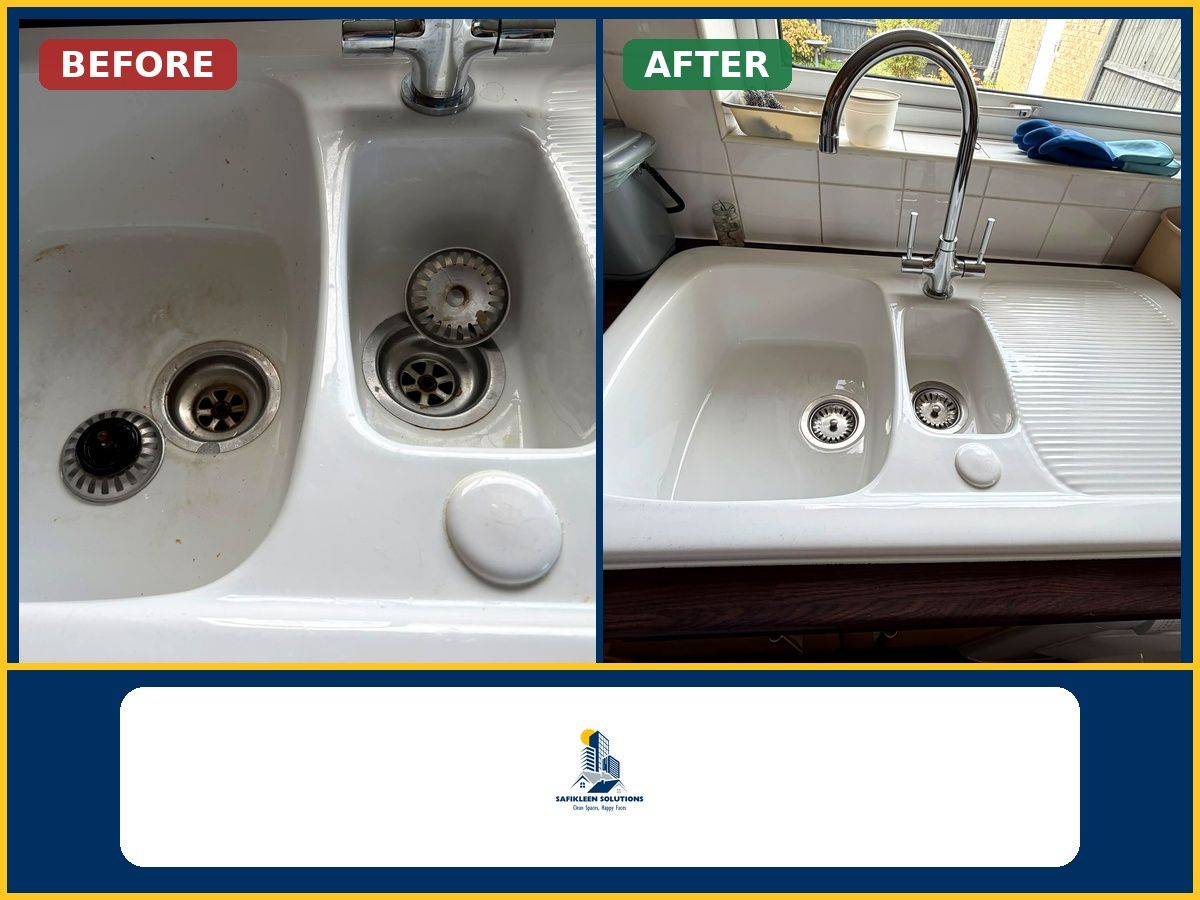
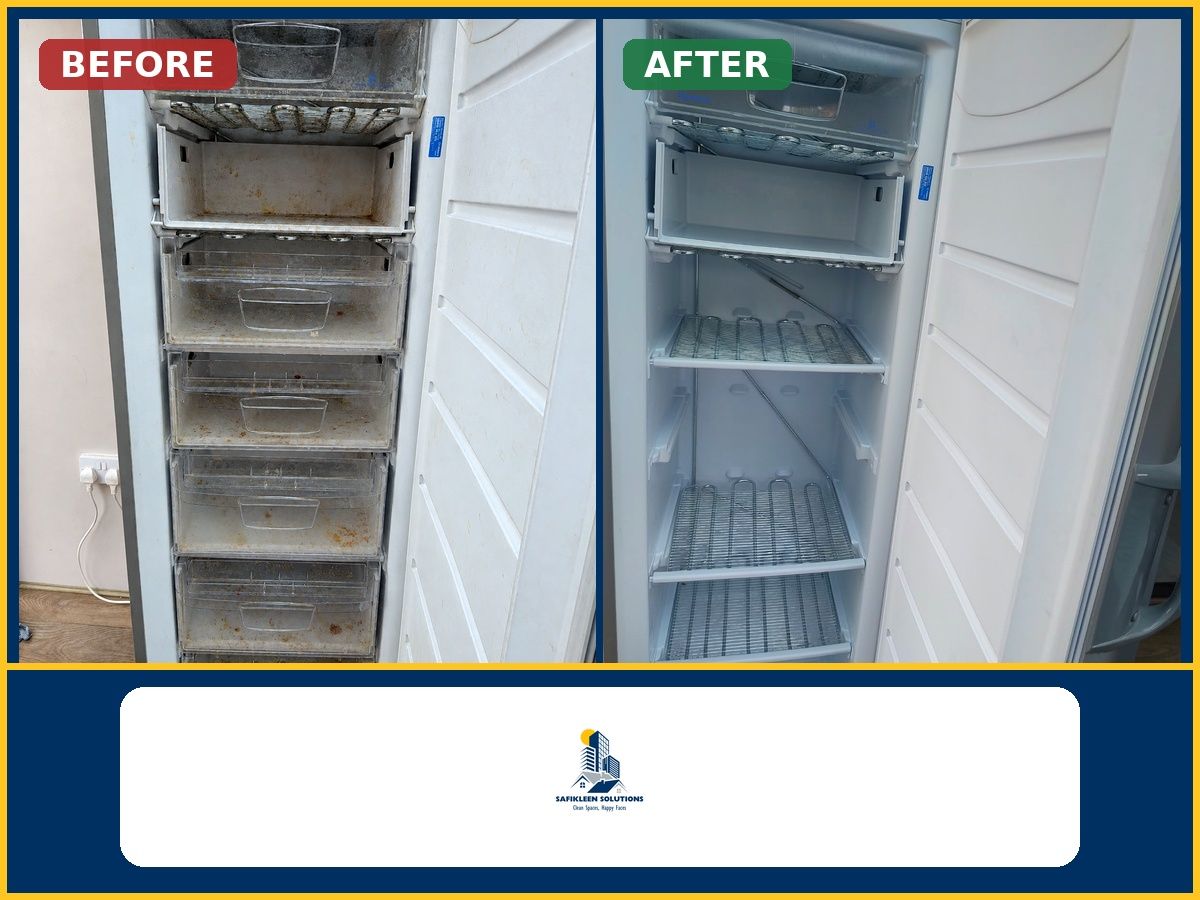
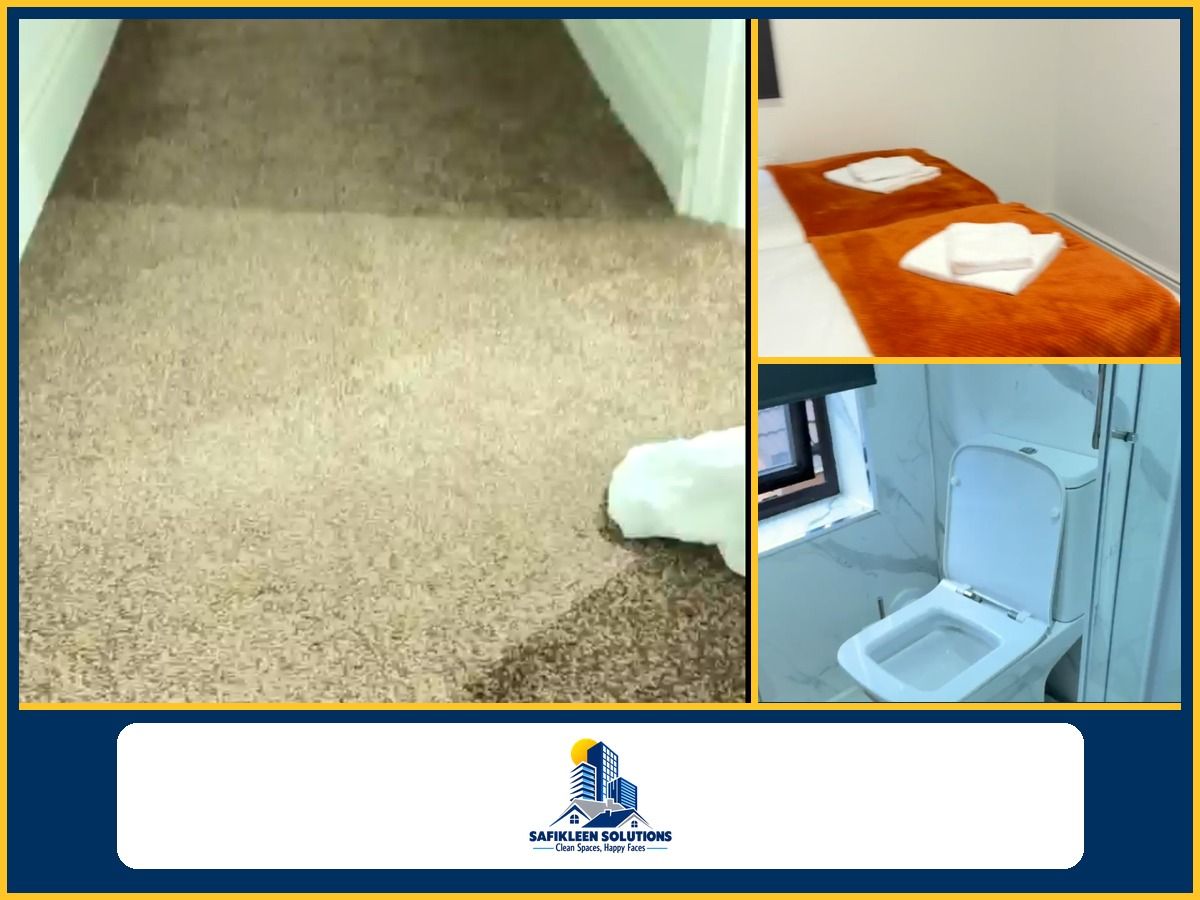
Here is the whole thing, before and after.
Why a clean room gets untidy again so quickly
A deep clean resets a room. It doesn't change how the room works.
If the layout was quietly generating mess before the clean, it carries on generating mess afterwards — just from a cleaner starting point. That's why a house can look immaculate on Saturday and lived-in by Wednesday, and why people conclude they're untidy when the honest answer is that their kitchen is making them look untidy.
Clutter isn't really about tidiness. It's about homelessness. Every object that doesn't have an obvious place to go ends up on the nearest flat surface, and flat surfaces near doorways and kettles fill up first because that's where people stop.
The three places clutter lands first
In almost every home we clean, the same three spots fill up before anywhere else.
- The worktop beside the kettle. It is the single most-visited point in a kitchen, and usually the one with the least designated storage. Mugs, spoons, packets, post.
- The draining board. Things that are "nearly dry" become things that live there. Then the things around them join.
- The first surface inside the door. Keys, bags, parcels, whatever was in your hands. In this house it was the end of the worktop.
None of those are cleaning problems. They're layout problems wearing a cleaning problem's clothes. You can wipe all three every single day and they'll be full again by evening, because the issue is that the stuff has nowhere else to be.
Should you organise before or after a deep clean?
After — and it's worth being clear why, because most advice says the opposite.
Decluttering before a clean makes the clean easier, which is why it's usually recommended. But deciding where things should permanently live is a different job, and it's much easier to make those decisions on empty, clean surfaces than on full ones. You can see what you actually have. You can see how much room there genuinely is. You're not making storage decisions around a pile you're already tired of looking at.
So: clear enough to clean, clean properly, then decide where it all goes. That last step is the one that usually gets skipped, and it's the one that determines whether you're booking the same clean again in six weeks.
Do cleaners move your things?
This is the question people are too polite to ask, and it deserves a straight answer.
We don't rearrange anyone's home without asking. Ever. A cleaner who decides where your belongings should live has misunderstood the job — it's your house, you're the one who has to find things in it at seven in the morning, and you know things about your own routine that we can't see in three hours.
What we do is say what we've noticed. We're in a lot of kitchens. We can see where mess is collecting and usually why. Pointing that out takes a minute and costs nothing.
Then it's your call. Sometimes people say yes, move it. Sometimes they say no, that cupboard is where it's been for fifteen years and it's staying. Both are fine. The suggestion is the service; the decision is always the client's.
What actually changed in this kitchen
With the owner's agreement, four things moved. None of them cost anything.
- The mugs went onto the rail under the wall unit, within reach of the kettle. The cupboard they came from now holds things used weekly rather than hourly.
- The canisters were lined along the back edge of the worktop rather than scattered across it, which gave back the whole front strip as usable space.
- The cloths and gloves moved to where they'd actually dry. Damp cloths folded on a worktop are a smell waiting to happen; hung properly they last longer and stop being a problem.
- The tea towels got a fixed position on the oven and dishwasher rails instead of wherever they landed.
Small, unglamorous changes. But the front of that worktop is now clear, and a clear worktop tends to stay clear, because mess accumulates where mess already is.
Keeping the bathroom that way
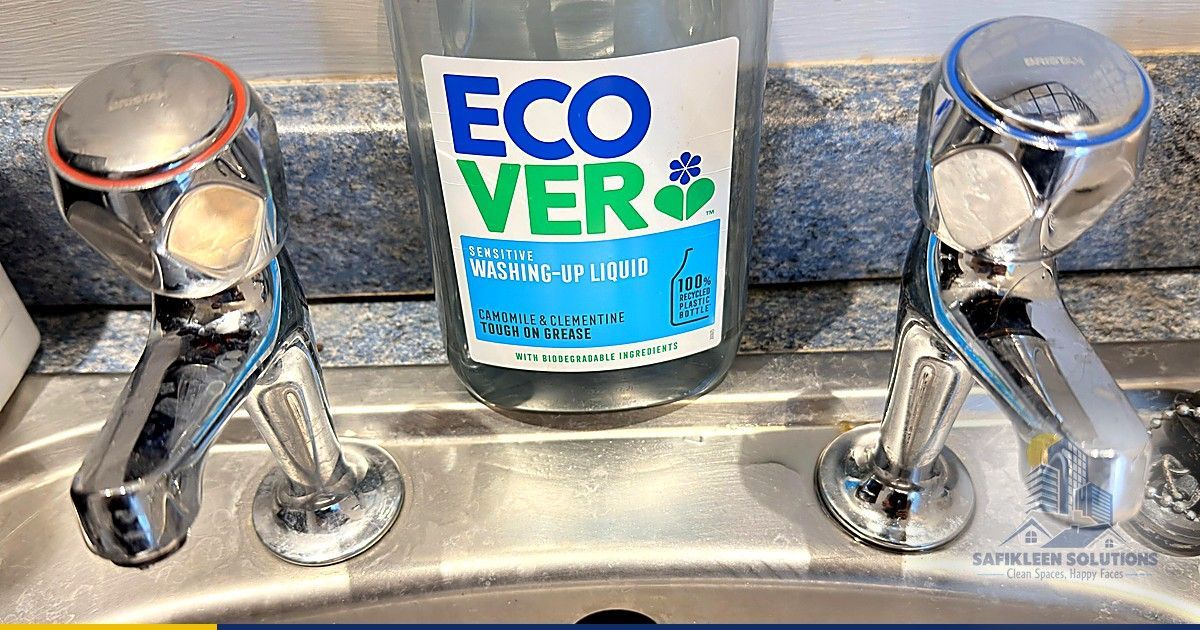
The bathroom in this house had the usual two problems: water spotting on the basin and splashback, and limescale around the plughole and tap base.
Both are hard water, not neglect. Peterborough sits in a hard water area, so minerals are left behind every time water evaporates off a surface. That happens whether or not anyone has been scrubbing.
The practical answer is less about product and more about timing. A quick wipe of the basin and taps while they're still wet takes about twenty seconds and stops the deposit forming at all. Descaling removes what's already there; drying is what stops it coming back. A cloth kept in the bathroom rather than carried in from elsewhere makes that twenty seconds likely to actually happen — which is, again, a layout decision rather than a cleaning one.
Frequently asked questions
Is organising part of a house cleaning service? Not automatically, and you should never be charged for advice you didn't ask for. At SafiKleen we'll mention what we'd change while we're working, and act on it only if you want us to. Some cleaning companies offer decluttering as a separate paid service; that's a different thing again.
How long should a deep clean last before the house needs another? It depends far more on layout and household size than on the quality of the clean. A well-laid-out home with two adults might go a couple of months between deep cleans with light upkeep in between. A busy family kitchen with nowhere to put anything can look lived-in within a fortnight, however well it was cleaned.
Will you throw anything away? No. We don't dispose of anything that isn't obviously rubbish, and if there's any doubt at all we leave it and ask.
Do you clean homes as well as commercial premises? Yes. Residential cleaning sits alongside our contract work for offices, schools, gyms, retail units and industrial premises across Peterborough and the surrounding area, along with end of tenancy cleaning and carpet and hard floor cleaning.
Can you work around how I already do things? That's the default. Most homes already have systems that work; they usually just have one or two spots where the system runs out. Those are the spots worth talking about.
The part people remember
Nobody rings up a cleaning company to be told where to keep their mugs. But the clean is temporary and the layout isn't, and the second one decides how long the first one lasts.
SafiKleen Solutions provide house cleaning in Peterborough alongside our contract work — deep cleans, regular housekeeping, end of tenancy, and specialist jobs including carpet and hard floor cleaning, window cleaning and pressure washing, across Peterborough and the surrounding area.
We'll always tell you what we'd move, and why. Nothing changes unless you want it to.
If a room in your house gets untidy faster than it should, call 01733 602904 or get in touch through the website and we'll come and take a look at it with you.
Ready to work with SafiKleen Solutions Limited?
Let's connect! We’re here to help.
Send us a message and we’ll be in touch.
Or give us a call today at 01733 602 904
Agency Contact Form
More Marketing Tips, Tricks & Tools