What Should Be in a Commercial Cleaning Specification?
Munyovi Victor IndiaziThe document that decides whether a cleaning contract actually works — what belongs in one, what gets quietly left out, and four questions that will tell you whether yours is any good.
Most cleaning contracts do not go wrong because somebody cut corners. They go wrong because nobody ever wrote down what "clean" was supposed to mean, and two reasonable people turned out to have two different pictures in their heads.
The document that prevents that is the cleaning specification. Here is what belongs in one, why the vague version costs more than the detailed version, and what to check before you sign anything.
What is a cleaning specification?
A cleaning specification is the written schedule that sets out exactly what gets cleaned, by what method, how often, and to what standard. It is the part of a cleaning contract that turns a price into a promise.
Without one you are not really buying cleaning. You are buying a number of hours, and whatever those hours happen to reach. That might be fine for six months. It stops being fine the first time somebody notices that nobody has touched the tops of the partitions since the contract started, and there is nothing in writing that says they should have.
A good specification protects both sides. The client knows what they have bought. The contractor knows what they have priced. Nobody is relying on goodwill to cover the gap.
It is worth being clear that the specification is not the contract. The contract covers the commercial terms — price, notice, cover, consumables, insurance, TUPE — and we have set those out separately in our guide to what is in a commercial cleaning contract. The specification is the other half: it describes the work itself. Most buyers read the contract carefully and skim the specification, which is the wrong way round, because the specification is the part you live with every day.
Why "wipe down" is the most expensive phrase in a cleaning contract
It appears in almost every weak specification, and it means nothing.
Wipe down with what? A dry cloth moves dust from one part of a surface to another. A damp microfibre lifts it. A sanitiser kills what is on a touch point but does nothing for the grease film on a kitchen cupboard door. These are three different jobs with three different outcomes, and "wipe down" buys you whichever one the person holding the cloth assumed.
The same goes for "as required", "regularly", and "to a satisfactory standard". Each of those is an argument waiting to happen, because each one is defined differently by the person paying and the person doing the work. A specification exists precisely to remove that ambiguity, so a line that reintroduces it is worse than no line at all.
The three things every line has to name
Every item in a specification should answer three questions. If it only answers two, it is not finished.
- The surface. Not "the kitchen" but the worktops, the sink, the cupboard fronts, the splashback, the appliance exteriors, the floor. Rooms get cleaned in pieces, and the pieces nobody named are the pieces nobody does.
- The method. Damp wipe, sanitise, scrub, vacuum, spot-clean, machine-scrub, descale. The method sets both the result and the time it takes, which is how it ends up in the price.
- The frequency. Daily, each visit, weekly, monthly, quarterly, annually. A surface with no frequency against it is a surface somebody will get to eventually.
Get those three on every line and most of what goes wrong in cleaning contracts simply cannot happen.
Input or output — which kind of specification do you want?
There are two ways to write one, and the difference matters more than most buyers realise.
An input specification prescribes the tasks: vacuum the carpets daily, damp wipe the desks daily, scrub the washroom floor weekly. It is easy to audit, because you can see whether the task was done. Its weakness is that doing every task on the list is not the same as the building looking right, and a contractor who works strictly to the list has a defence for a building that does not.
An output specification prescribes the result: washrooms free of marks, odour and visible debris at all times; carpets free of litter and visible soiling. It is harder to argue with and much harder to price, because the contractor is carrying the risk of however much work the standard turns out to need.
Most good contracts blend the two. The routine work sits as inputs with firm frequencies, and a short set of outputs sits over the top to catch the things a task list cannot anticipate. If your specification is purely one or the other, ask why.
What should be on the specification, room by room
Offices and desk areas
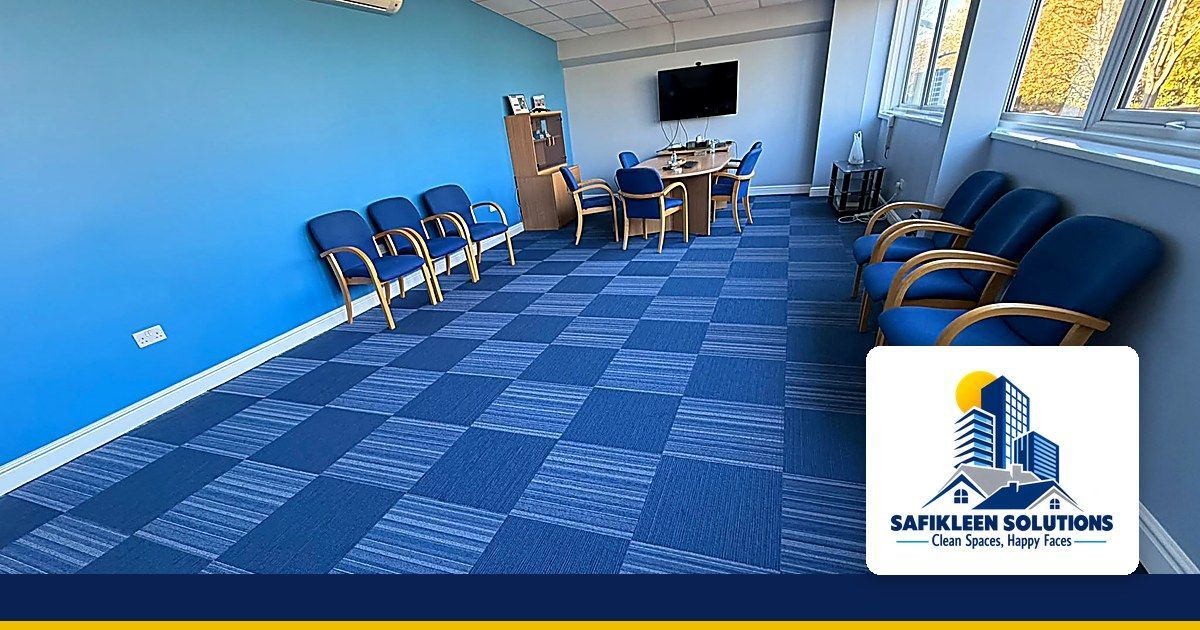
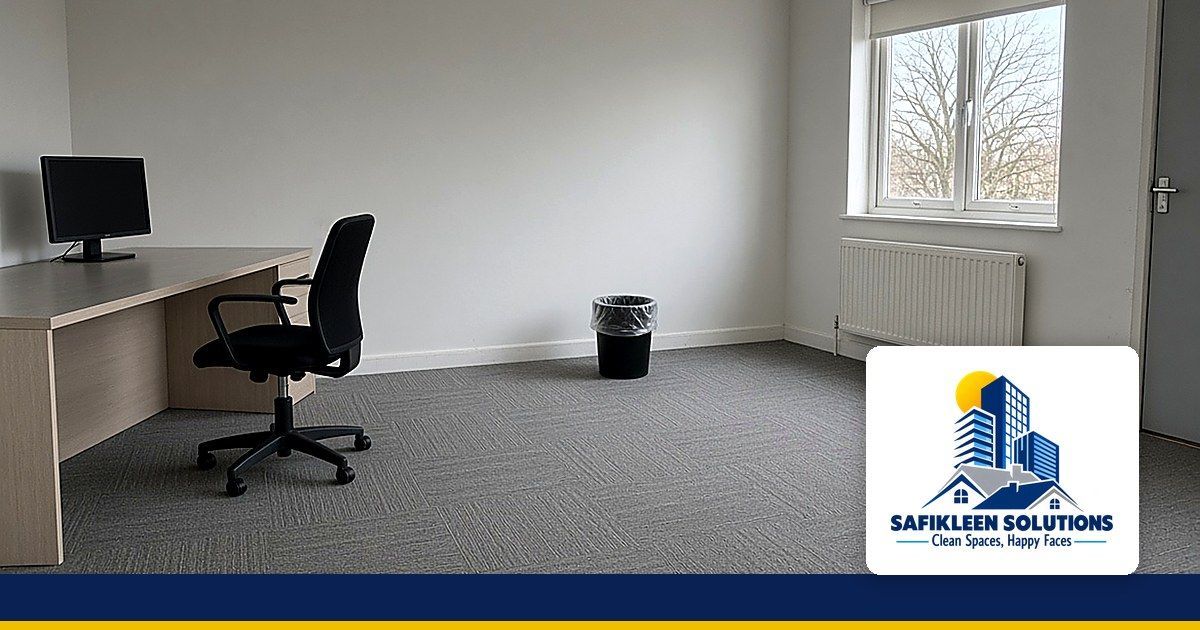
Desks and clear surfaces, telephones and shared equipment, waste bins and recycling, internal glass and partition glazing, window sills, skirtings, and the floor. Desks usually come with a clear-desk rule — the specification should say what the cleaner does when a desk is covered, because "works around it" and "does not touch it" are different answers and one of them leaves a surface uncleaned indefinitely.
Washrooms
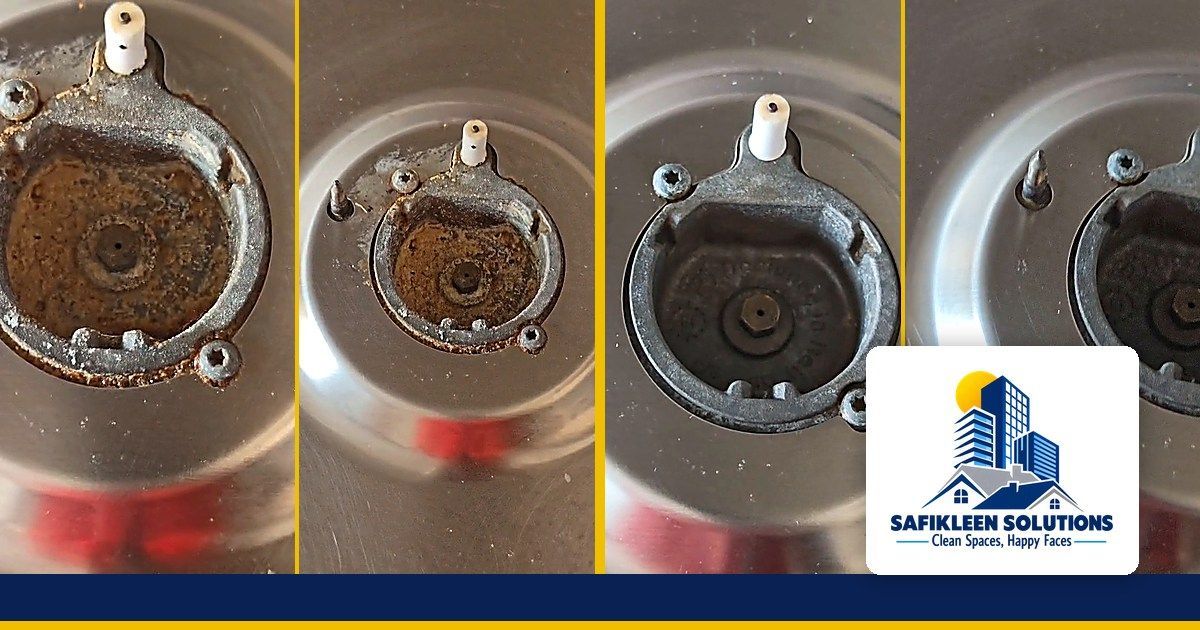
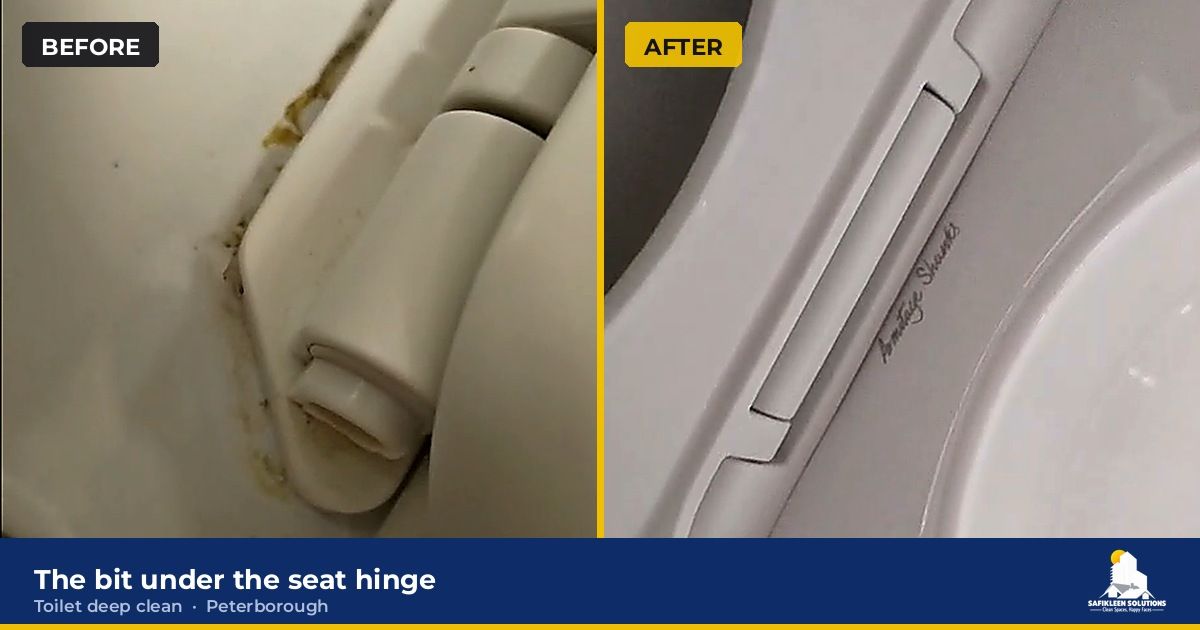
The highest-scrutiny area in any building and the one that generates the most complaints. It needs sanitary ware, taps and fittings, mirrors, dispensers, tiling and partitions, floors including the edges and the area behind the door, sanitary waste, and consumables replenishment. Descaling belongs on the periodic list, not the daily one, because it is a different job with a different chemical and a different dwell time.
Kitchens and break areas
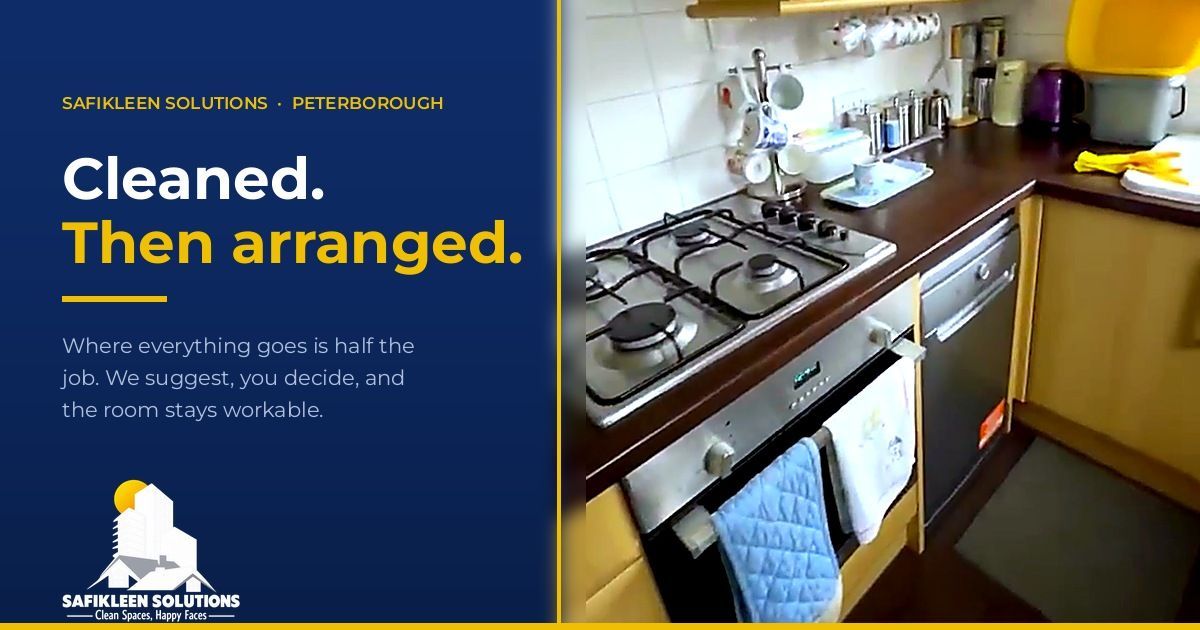
Worktops, sinks, taps, cupboard fronts, appliance exteriors, the fridge interior on a stated frequency, waste, and floors. Kitchen cupboard fronts collect an airborne grease film that a damp cloth will smear rather than remove, so the method matters here more than almost anywhere else in the building.
Floors
Hard floors and carpets need separate lines. Hard floors want sweeping or vacuuming before any wet work, damp mopping on a stated frequency, and a periodic machine scrub — with resealing if the finish calls for it. Carpets want vacuuming on a stated frequency, spot treatment as marks appear, and periodic hot water extraction. We have set out how the periodic work fits around the routine in our guide to carpet and hard floor cleaning.
Production, workshop and warehouse areas
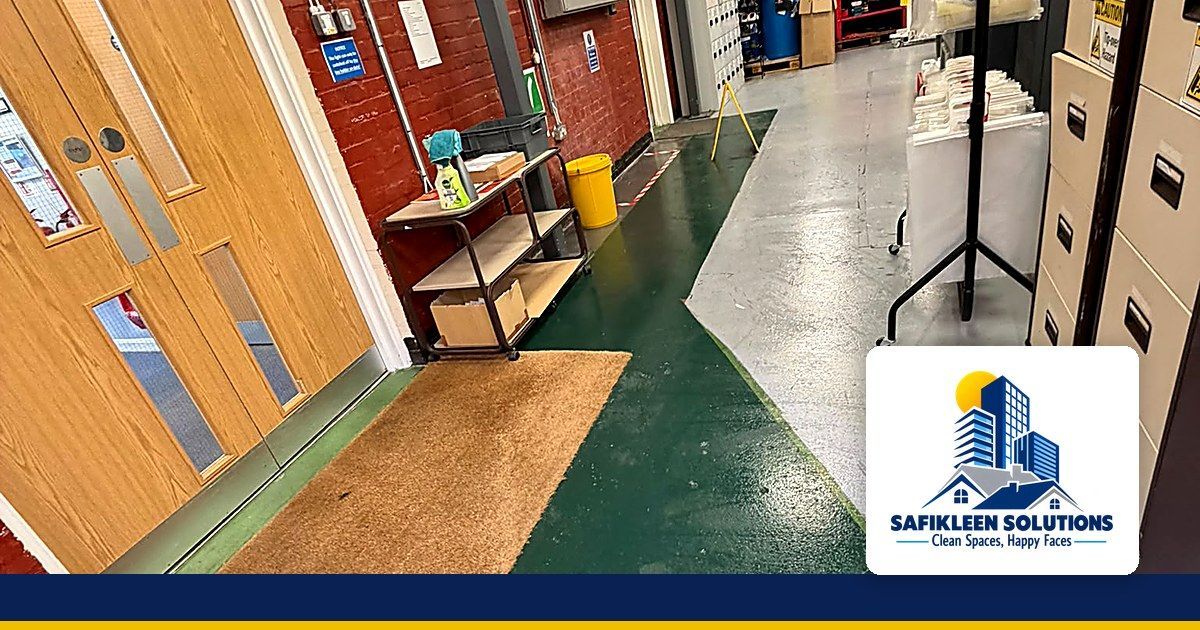
These are the areas most often left out of a specification altogether, usually because they feel like somebody else's responsibility. They need their own lines: which surfaces the cleaner touches and which the operator does, what happens around running machinery, and what the exclusion zones are. We have written separately about cleaning around live machinery and why the boundary has to be agreed in advance rather than negotiated on the night.
Touch points deserve their own line
Door handles and push plates, light switches, handrails, lift buttons, shared keyboards, kettle handles, fridge doors, taps.
These are small, they take minutes, and they are the single highest-value item on most specifications — because they are where hand-to-hand transfer actually happens. They are also the first thing that quietly disappears when a cleaner is under time pressure, since nobody looks at a door handle and thinks it looks dirty.
Put them on their own line with their own frequency. A touch point schedule buried inside "wipe down the office" is a touch point schedule that is not happening.
What usually gets left out
The same handful of things, in building after building:
- High-level dusting — tops of cupboards, partitions, cable trays, door frames, light fittings
- Vents and extract grilles, which show their neglect as a grey fur that is visible from across the room
- Under and behind — desks, pedestals, vending machines, large equipment
- Internal glass, which is nobody's job until it is specified as somebody's job
- Skirtings and floor edges, where a rotary machine does not reach and a mop leaves a line
- Window reveals and sills, particularly on the inside of external doors
None of these need doing daily. All of them need to exist somewhere on a periodic schedule with a date against them, or they will not be done at all.
Frequencies: what belongs where
Daily or each-visit work is the routine: waste, washrooms, kitchens, touch points, floors in circulation areas, desks.
Weekly work is the next layer down: full vacuuming including under furniture, internal glass, skirtings, detailed washroom work.
Periodic work is everything that needs equipment, time or an empty building: machine scrubbing and resealing hard floors, carpet extraction, high-level dusting, descaling, deep-cleaning kitchens and appliances.
The periodic schedule is the part most often agreed verbally and then forgotten. It should sit in the contract with stated months against it, because it is the work that keeps a building from slowly declining while the daily clean is being delivered perfectly.
Colour coding, chemicals and method
A specification should state the colour-coding system in use — the standard UK scheme separates washroom, general, kitchen and clinical equipment by colour so that cloths and mops cannot travel between areas. If your contractor cannot tell you their colour code off the top of their head, that is worth knowing before you sign.
It should also be explicit about dwell time wherever a sanitiser or disinfectant is specified. A product applied and immediately wiped off has not had time to work, and the surface is wet rather than disinfected. That is a training point, but it belongs in the specification so that it is a contractual expectation rather than a hope.
How do you know whether it is being delivered?
Write the audit into the contract alongside the work. A specification nobody checks is a wish list.
That means a stated audit frequency, an agreed scoring method, a named person on each side, and a route for raising and closing issues. The contractual machinery around that — what happens if scores keep falling short, and what notice applies — belongs in the contract rather than here.
What belongs in the specification is the measuring stick: which areas are scored, against which lines, and how often. An audit with no specification behind it is just somebody walking round a building having opinions.
Who should write the specification?
The contractor usually drafts it, because they know how long the work takes and what equipment it needs. But it should be written after a site visit, not from a floor plan and a phone call.
Be wary of a specification that arrives before anybody has walked the building. It will be a template, it will describe a generic office, and it will miss whatever is actually particular about your premises — which is the only part that was ever going to cause a problem.
Be equally wary of one that runs to forty pages. Length is not thoroughness. A specification that nobody on site will ever read is functionally the same as not having one.
Four questions that test a specification
You do not need to read all forty pages to find out whether a specification is any good. Four questions will tell you.
- Show me the line that covers the tops of the partitions. Or the vents, or behind the vending machine. Pick anything awkward and see whether it exists.
- What is on the periodic schedule, and in which months? If the answer is "as needed", there is no periodic schedule.
- What is your colour-coding system? A contractor who has to look it up does not use it.
- What is excluded, and why?
That last one is the most useful question on the list. Every specification has exclusions. A contractor who can name theirs straight away has walked the building and thought about it. One who says there aren't any has not read their own document.
Cleaning specifications in Peterborough
SafiKleen Solutions write a specification for every contract we take on, after visiting the premises rather than before. It names the surface, the method and the frequency on every line, it carries a periodic schedule with months against it, and it states what is excluded.
We work across offices, schools, production and warehouse premises, retail units and lettings throughout Peterborough and the surrounding area — from routine office contract cleaning through to school and campus cleaning and post-construction cleans.
If you have an existing specification and you are not sure whether it is doing its job, we are happy to read it and tell you what is missing, whether or not you end up working with us. If you do not have one at all, that is the place to start. Get in touch through our contact page to arrange a site visit.
Ready to work with SafiKleen Solutions Limited?
Let's connect! We’re here to help.
Send us a message and we’ll be in touch.
Or give us a call today at 01733 602 904
Agency Contact Form
More Marketing Tips, Tricks & Tools