Deep Clean vs Regular Clean: What Actually Gets Touched in a Peterborough Home
Munyovi Victor IndiaziWhat a deep clean reaches that a weekly clean is built to skip, room by room, and when each one is worth booking.

A regular clean keeps a home level. A deep clean resets it. The difference is not effort, and it is not really time — it is reach. A deep clean goes after the surfaces a weekly clean is built to skip, because skipping them is the only way a weekly clean fits into two hours.
That sounds like a technicality right up until you lift a kitchen sink strainer out for the first time in a year.
Here is what actually changes in a deep clean, room by room, based on how we work through a domestic deep clean in Peterborough homes.
Deep clean vs regular clean: the short answer
A regular clean maintains the surfaces you see and touch daily: worktops, floors, visible glass, toilets, basins, bins. A deep clean does all of that and then adds the surfaces that only get attention a few times a year — inside and behind appliances, extractor filters, grout lines and silicone seals, sink strainers and overflows, skirting boards, door frames, light switches, window tracks, and the joints where two materials meet.
Put plainly: a regular clean keeps a room presentable. A deep clean removes what has built up since the last one. You need both, and they are not substitutes for each other. Booking a deep clean every week would be a waste of your money, and expecting a weekly clean to do a deep clean's job is the most common reason people think their cleaner is underperforming when they are not.
The surfaces a regular clean never reaches
Six places account for most of the difference. They have one thing in common: they stay damp, or they sit outside the natural wipe path, or both.
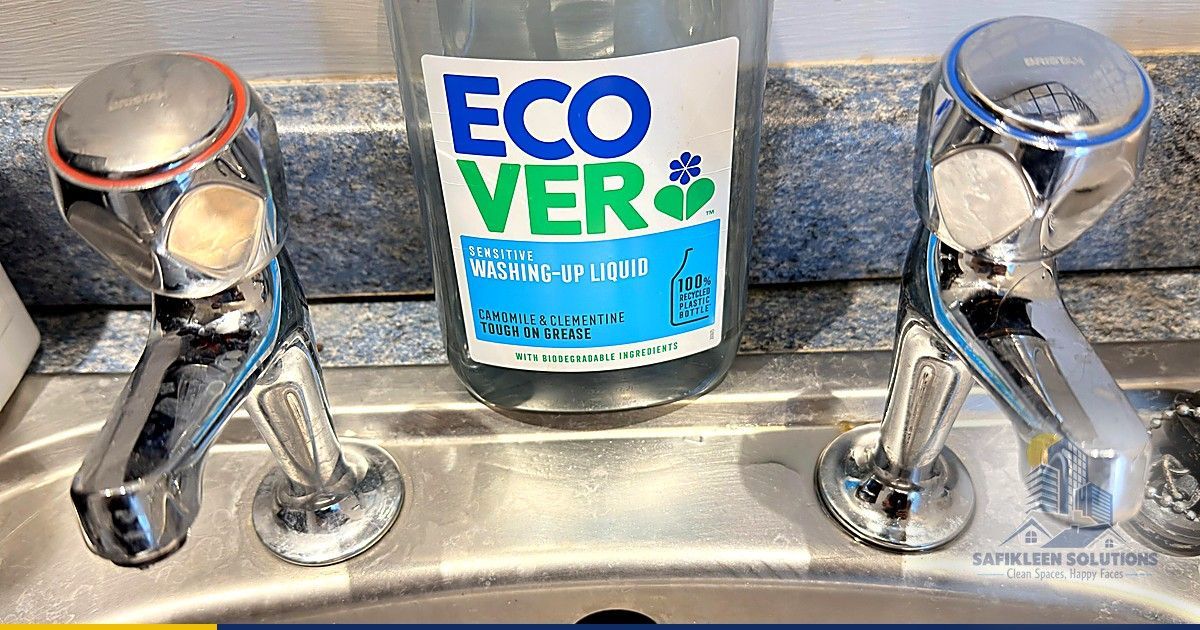
- Sink strainers and overflows. Permanently wet, never wiped, and the single most reliable indicator of how thorough a clean has been. A cloth over the top does nothing — the strainer has to come out and soak.
- Grout and silicone seals. Grout is porous and silicone holds moisture against it. This is where discolouration starts, and it starts long before you notice it.
- Extractor filters. Kitchen extractor filters collect airborne grease. Left long enough, the grease stops being a film and becomes a coating that drips.
- Behind and under appliances. The gap beside a washing machine or fridge collects dust, crumbs and moisture in a combination that dries into a crust.
- Door frames, handles and light switches. High-contact, low-visibility. They look clean from two metres away and rarely are.
- Window tracks and sills. Condensation plus dust equals a sludge that a dry cloth smears rather than lifts.
None of these are difficult. They are simply slower than a weekly visit allows, which is exactly why they accumulate.
What a deep clean does in the kitchen
The kitchen is where a deep clean is most visible, because grease behaves differently from dust. Dust sits on a surface. Grease bonds to it, then traps everything that lands on it afterwards.
On a kitchen deep clean we take the sink apart as far as it comes apart — strainers out and soaked, the overflow flushed, the collar around the waste cleared, and the seal where the basin meets the worktop worked along its length. Those joints hold more than the worktop around them because water sits in them between cleans.
Beyond the sink: extractor filter degreased or replaced, hob and splashback taken back to the surface rather than wiped over, cupboard fronts cleaned including the grab edge underneath each door, appliance exteriors and the gaps between them, and the floor edges and skirting that a mop head cannot physically reach.
One point worth making because it saves people money: a surface that has been left long enough will not come back in one visit, and a cleaner who promises otherwise is guessing. Burnt-on carbon and years of grease layering sometimes need a second pass. We would rather say that before the job than after it.
What a deep clean does in the bathroom
Most of what you can see lifting off a bath or basin during a deep clean is limescale and body-oil film. Both build in layers thin enough to read as the surface itself, which is why people often assume a bath is simply old rather than dirty.
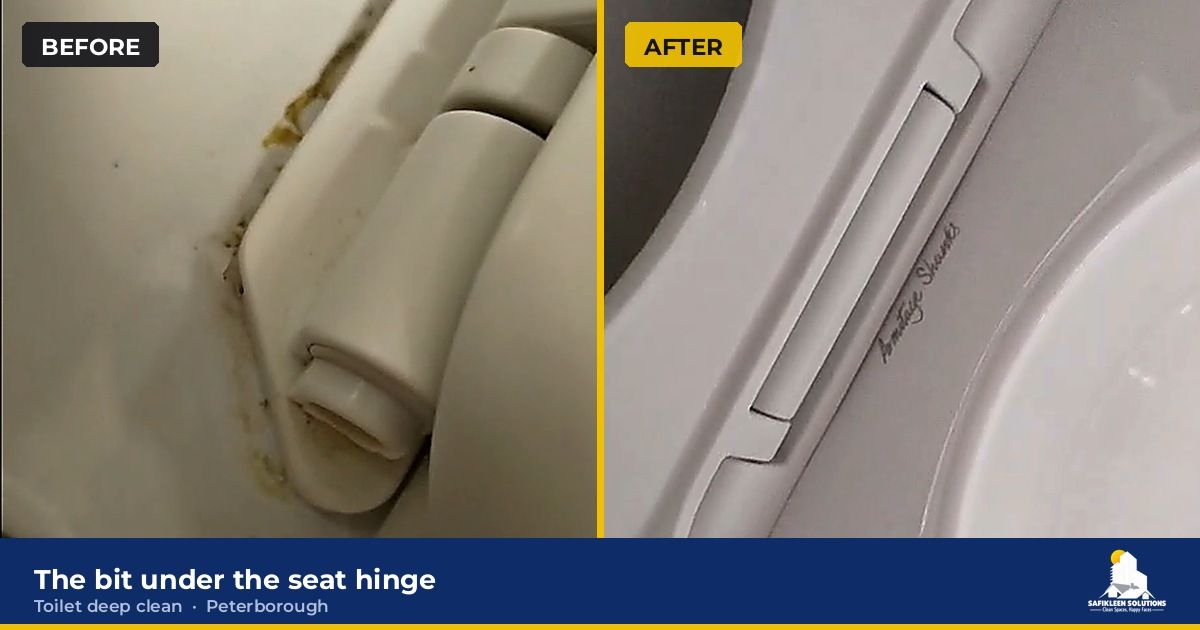
Neither comes off with pressure. They come off with dwell time and the right product — scrubbing a glazed surface harder is how enamel and chrome end up permanently dulled, and once that has happened no clean brings it back. On a bathroom deep clean the work is: limescale treated on taps, screens and tiles with proper contact time; grout lines worked individually; silicone seals cleaned along the bath and basin edges; the toilet cleaned past the bowl, including the hinge gap under the seat and the base behind the pan; extractor vent cleared; and the basin strainer and overflow given the same treatment as the kitchen.
If the problem you are trying to solve is a smell rather than a look, the cause is usually one of a small number of specific places, and we have written about why a toilet still smells after it has been cleaned separately.
How long a deep clean takes
A deep clean of a kitchen and a bathroom in a typical Peterborough two or three-bedroom home takes most of a working day. A whole-home deep clean usually runs across a full day or two depending on size, condition and how much needs moving.
Two things change that number more than floor area. The first is how long it has been since the last deep clean, because accumulation is not linear. The second is access — a deep clean that cannot get behind the appliances or into the cupboards is a regular clean with a deep clean's price tag, so it is worth clearing what you can before the team arrives.
How often a home actually needs one
For most households, twice a year is the honest answer, with the kitchen and bathroom often wanting a third visit in between. Homes with pets, hard water, smokers, or more people than bedrooms tend to need it more often; a lightly used home with a good extractor and soft water can go longer.
Peterborough sits in a hard water area, which matters here. Limescale is not a cosmetic problem — it builds texture, and once a surface has texture it holds soap residue and dirt far more readily than it did when it was smooth. Letting limescale run for years makes every future clean harder, not just the next one.
When a deep clean is the wrong answer
Three situations come up often enough to be worth naming, because in each one a deep clean is not what you want to be paying for.
You are moving out. What you need is an end of tenancy clean, which is a different specification written around what a landlord or agent inspects against an inventory, not around how the home feels to live in.
The problem is the carpet or the floor itself. Soiling held inside carpet pile or a porous hard floor is an extraction job, not a surface job. That is carpet and hard floor cleaning, and doing it after a deep clean rather than before is the usual order.
You want the home kept at a standard, not reset once. Then what you want is a schedule — our residential cleaning plans exist for exactly this, and a single deep clean at the start followed by regular visits costs less over a year than repeated rescue jobs.
Booking a deep clean in Peterborough
SafiKleen Solutions runs domestic deep cleans across Peterborough, Stamford and the surrounding villages, using eco-friendly products that are safe around children and pets. Our team is trained, insured and background-checked, and we quote after understanding the condition of the property rather than from a square-footage table, because condition is what actually determines the work.
If you want a straight answer on whether your home needs a deep clean or a regular schedule, tell us what you are dealing with and we will say which one we would book. Get in touch for a free, no-obligation quote.
Frequently asked questions
What is included in a deep clean?
A deep clean includes everything in a regular clean plus the surfaces a weekly visit skips: inside and behind appliances, extractor filters, grout and silicone seals, sink strainers and overflows, skirting boards, door frames, light switches, window tracks and sills.
Is a deep clean worth it?
It is worth it when a home has not had one in six months or more, when you are taking over a property, or when regular cleaning has stopped producing a visible improvement. It is not worth it as a replacement for routine cleaning.
How much does a deep clean cost in Peterborough?
Cost depends on property size, condition and how long it has been since the last deep clean, not on floor area alone. SafiKleen Solutions quotes free and without obligation, and will tell you if a regular clean would serve you better.
Do I need to be home during a deep clean?
No. Many clients give access and go to work. What matters more than your presence is access to the areas being cleaned — cupboards, behind appliances and anywhere that needs clearing first.
Ready to work with SafiKleen Solutions Limited?
Let's connect! We’re here to help.
Send us a message and we’ll be in touch.
Or give us a call today at 01733 602 904
Agency Contact Form
More Marketing Tips, Tricks & Tools